

Rabbits are experts at hiding illness, so daily and weekly checks at home should be backed up with regular visits to our Woodside Avenue surgery. Whilst the exact frequency of your furry friend’s vet visits will depend on a number of factors, we normally remind owners in spring and autumn. Ideally, we’ll get to see your rabbit at least once a year and just before winter is an ideal time to make sure they’re prepared for the colder months ahead.
Book a pre-winter rabbit check-up
Typical vet visits for your rabbit may involve annual vaccinations and dental check-ups, and we may recommend other types of treatments. Nicola Armstrong, our head vet, thinks it’s useful to remind owners what they should be looking for in between vet visits.
Below is a list of the essential areas we check when you bring your pet rabbit to our Glasgow surgery. We’re sharing this because rabbits are generally pretty good at keeping themselves clean, so if you spot anything mentioned in this list, it really is worth bringing them in.
Seven essential things for your rabbit health check list
- Eyes – Your rabbit’s eyes should be clear, bright, and free of discharge. Pull up the eyelid and the eye tissue should be pink. If it’s red or pale, or there is discharge from the eyes, call us.
- Ears – The inside of your rabbit’s ears should be clean and clear of wax/dirt. Check inside the ear with a penlight. Ask us to show you how to clean your rabbit’s ears on your next visit.
- Nose – This is really simple; your rabbit’s nose should be free of any discharge whatsoever. If you do see discharge from the nose, call us on 0141 643 0404.
- Teeth – These are really important. Check your rabbit’s teeth by carefully pulling the upper and lower lips back. You should see the upper front teeth aligning with the lowers and a slight overbite. If the teeth are too long or the bite isn’t good, we may need to trim them, and we’ll probably need to talk to you about their diet.
- Feet – The most common problem with a rabbit’s feet is sore hocks or heels. If you see foot sores, especially open sores, call us.
- Nails – Nails shouldn’t be too long. If they are, then it’s a simple job to clip them at home. Ask us to show you how to safely clip your rabbit’s nails on your next visit.
- Fur & Skin – Your rabbit’s coat should be soft, shiny, and free of matted hair. If you back-brush the coat with your hand, the skin should be clear of dust and flakes.
As well as the essential list above, if you bring your rabbit in for a pre-winter health check-up we’ll be looking at areas such as their glands, their mobility, and talking to you about their eating and toileting behaviours. If you’re not sure when they were last seen, or, if you know it was over a year ago due to the disruption in 2020/21, then please do book an appointment.

Is it safe to breed guinea pigs? It’s not difficult to breed these charismatic pets, but it can be unsafe if you don’t time it right. Female guinea pigs (sows) need to be young and fit for their first pregnancy to avoid tragedy.
Avenues Veterinary Centre’s nursing team has lots of advice on guinea pigs and breeding. Why not ask them questions on Facebook and help other owners at the same time?
Before breeding your guinea pig, head nurse Linsey Wallace recommends asking yourself:
- Do you have suitable, loving homes lined up for the piglets?
- Do you have additional housing to separate male guinea pigs & piglets from females?
- Have you considered the potential health implications?
The risks of breeding guinea pigs for the first time
Delaying a female’s first pregnancy after 6 months of age will result in serious, even life-threatening birthing complications. Part of her pelvis must separate before giving birth and after about 8 months it fuses together, and a caesarean is needed. This is a risk to mum and her piglets.
Another serious risk is pregnancy toxaemia, with stress and obesity being major predisposing factors. Other factors include advancing age, lack of exercise, fasting during pregnancy, and having many babies. Signs may not show until two weeks before the birth, so prevention is key: reduce stress, keep your guinea pig fit & healthy, feed a nutritious diet, and always provide fresh water. Also, house her indoors/somewhere sheltered to avoid cold weather risks.
Linsey’s guinea pig breeding ‘need to know’ list:
- Male guinea pigs (boars) are sexually mature and able to mate at around 2-3 months; it’s 2 months (55-70 days) for sows but can be earlier for both. Neutering males is necessary to avoid pregnancies in opposite sex pairs – contact us about neutering.
- Sows have estrous (fertile) cycles throughout the year, but mostly in spring. Cycles last 16 days and she is fertile for 6-11 hours, mostly at night.
- A new estrous cycle begins shortly after giving birth. Boars should be housed separately before she gives birth to avoid her being pregnant again while nursing piglets.
- Guinea pig pregnancies last around 63 days; a large litter will make the pregnancy longer. You can tell if your guinea pig is pregnant as she will gain a lot of abdominal weight in the latter stages, even doubling in size.
- Sows do not build nests so time of delivery can be hard to spot. About 1 week before delivery, part of her pelvis will start to slowly widen, just in front of the external genitalia. An hour before delivery this should be about 1 inch wide.
- Uncomplicated births last about 30 minutes with 5 minutes (average) delivery per piglet.
- Nursing should be allowed for 2 weeks; male piglets should be removed at 3 weeks.
- Breeding can sometimes shorten a female guinea pig’s life expectancy.
Do you have any questions, like “how many babies can a guinea pig have?” or “how do you introduce potential mates safely?” or perhaps “are they born with hair?” Pop over to our Facebook page and our Glasgow nurses will happily answer them.

Your accommodation is booked and you’re excitedly counting down the weeks until your summer holiday. Your guinea pig might not be quite as thrilled, however, about your upcoming trip…
Guinea pigs can become easily stressed by sudden changes to their environment or routine, which can present as irritability, aggression, depression, reduced activity, and self-mutilation. Our Woodside Avenue nurses have come up with a list of things guinea pig owners should consider when planning time away.
Share your pet’s holiday prep on Facebook
How to prevent Guinea Pig Holiday Blues
You can minimise stress by asking someone you trust to provide daily care for your guinea pig at your home while you’re away. Live-in care would be ideal, or at least two daily visits.
It’s helpful to think about whether your chosen pet sitter knows how to take care of guinea pigs if they’ve not done so before. Our list below covers what care guinea pigs need and will help you create a personalised ‘how to guide’ for their holiday carer.
10 things guinea pigs need while you’re on holiday
- Routine – Consistency can reduce potential stress so write down your guinea pig’s routine, including feeding times, exercise, and grooming. Any changes should be introduced gradually.
- A meal plan – Stock up on your guinea pig’s food and create a meal plan for the time you’re away, including treats. Ask your pet sitter to stick to the plan to keep your pet happy & healthy.
- Fresh water – Your pet’s water bowl/bottle will need changing daily so they always have access to fresh water. Bottles should also be checked daily for blockages.
- Summer care – If it’s going to be hot in Lanarkshire while you’re away, move the hutch somewhere cool, safe and well ventilated, away from direct sunlight. Guinea pigs need some carefully monitored time in natural sunlight (or under a UV lamp) to help them get the vitamin D they need. An outdoor playpen can be useful.
- Grooming – We can check if your pet’s teeth need filing and nails need clipping before you go, just ask our team. Long-haired guinea pigs especially need daily grooming to remove tangles, mats, and bedding from their hair – show your pet sitter how.
- Daily/weekly cleaning – To avoid harmful health conditions, your guinea pig and their hutch should be kept clean, dry, and free of excess dust. Replace soiled bedding daily. Gently clean & dry your pet’s bottom if needed with pet shampoo. Hutches should have a thorough clean weekly.
- Boredom busters – Boredom can affect your guinea pig’s health. Keep them occupied with enriching toys and challenges that enable them to mimic wild behaviours. Try hanging treat balls, tubes/tunnels, foraging trays, and digging boxes. Remember though, they’re not great climbers!
- Handle with care – Falls are a risk for small furry pets, particularly when being handled by someone new. Show your pet sitter how, keeping your pet close to the chest or lap for safety.
- Keep unneutered girls and boys apart – Ensure your sitter knows to keep ‘intact’ males and females apart unless you want to come home to expectant parents!
- Know the signs – Common guinea pig illnesses needing urgent veterinary care include:
- Flystrike – look for wet fur patches (incontinence), flies & maggots particularly on the rear.
- Not eating or drinking for 6+ hours – look for appetite/thirst loss, less stools/urination.
- Bacterial pneumonia – Look for respiratory distress, eye/nose discharge, sneezing, weight loss, depression.
We hope our list above helps your guinea pig have an enjoyable time when you go on holiday. Just in case there are any issues, see our contact and emergency pet care information here.
You could help other guinea pig owners by sharing your pet’s holiday preparation plans on our Facebook page.

April is National Pet Month and a time to focus on responsible pet ownership. You might think owning a small furry pet like a hamster, guinea pig, gerbil, or chinchilla, is pretty straight forward and doesn’t take much responsibility. Right?
It’s true, small furry pets do spend most of their time in cages and hutches. However, in order to give them the healthy and fulfilling life they deserve, would-be owners should educate themselves on what their preferred species’ needs are, before making a purchase. Head nurse Linsey Wallace has this advice:
Responsible pet ownership – caring for small furries:
- Healthcare: Your small furry pet won’t need annual vaccinations (except rabbits), but they will benefit from annual or bi-annual health checkups. If you spot unusual behaviours, lumps or bumps, or a reduced appetite, you should contact your vet for advice.
- Nutrition: Do some research into what a healthy and balanced diet looks like for your particular species of pet. Diet is very important for oral health too as small furries need the right type of food to look after their teeth.
- Enrichment: Boredom and loneliness can lead to self mutilation and health issues. Enrich your small furry pet’s life with regular human interaction, toys to play with, and challenges that mimic those they’d experience in the wild – give them obstacles to move, climb on, and chew through to make themselves a comfortable home. Remember though, most small furries are nocturnal and should not have their daytime sleep disturbed.
- Handling: Getting your small furry pet used to being handled is important so that a) you can enjoy some quality time with them, b) you can clean out their housing without causing them stress, and c) both you and the vet can check them over without upsetting them, or being bitten.
- Company: If you’re able to, it’s a good idea to keep small furry pets in pairs for companionship. Research which pairings work best for your species, and talk to a vet about neutering.
- Environment: Whether an indoor cage or outdoor hutch, your pet’s housing should be warm, well ventilated, and safe from predators. Give them a comfortable bed and somewhere to hide out too.
- Hygiene: Remove soiled bedding and droppings daily. Give bowls and toys a weekly clean. Once a month, remove everything and clean it (including the housing itself) with warm soapy water if possible or a pet-safe cleaning spray.
Get in touch with our nursing team if you have any questions about this topic.

Rabbits tend to be fairly easy to care for, but accidents and health emergencies can happen. It’s important to remember that most rabbit emergencies will require professional veterinary treatment, but you may be able to provide basic first aid and treat minor injuries or ailments on the spot if you have a rabbit first aid kit.
Call us for advice on: 0141 643 0404
Avenues Veterinary Centre’s nursing team has this advice for you about what constitutes a rabbit emergency and what your first aid kit should include.
You should see a vet immediately if your rabbit has: a large open wound, an escape of flowing, spurting or oozing blood, pale or blue gums, laboured breathing (mouth open), excessive diarrhoea, is seizuring or has lost consciousness, has eaten something harmful, or hasn’t eaten or pooped in 12 hours or more.
Your rabbit’s first aid kit should include:
- Phone number for your vet.
- Small pet carrier and towels.
- Hand sanitiser and gloves.
- Gauze pads, cotton buds & pads, soft bandages & vet wrap bandages.
- Blunt tipped scissors & tweezers, nail clippers, eye dropper.
- Feeding syringes to administer food, water or medicines.
- Digital rectal thermometer and petroleum jelly – normal body temperature should be 101-103 degrees Fahrenheit, rectal reading should be 103-104.
- Instant cold packs – use on the side of the carrier for heatstroke, or wrap in a towel if using briefly on a swelling. Quick temperature change can cause shock.
- Heat pad for mild hypothermia – never put directly under your rabbit, use a towel and put on a low setting.
- Saline or pet-safe antimicrobial solution (Hibiscrub) to clean wounds.
- Pet-specific antibacterial spray (Vetericyn) for treating wounds & infections.
- Any medications prescribed to your rabbit.
- Brushes and flea comb.
- Pot of baby food with rabbit-safe ingredients (try organic pumpkin or squash with no additives or preservatives) for when your rabbit won’t eat. Dilute it with water and use a feeding syringe to administer it slowly. An alternative is Oxbow Critical Care for herbivores.
- Small LED Flashlight for examining eyes, nose and ears.
Call us on 0141 643 0404 to get some of these items and for rabbit first aid advice.
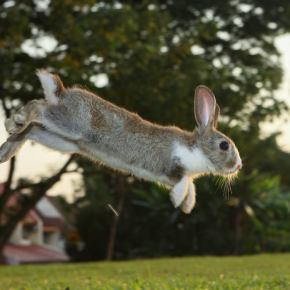
In the wild, rabbits tend to get a lot of their daily exercise and enjoyment foraging for food. In a home set-up where food is literally handed to them in a bowl, there isn’t much opportunity for this type of physical or mental activity. Being chased by predators provides plenty of exercise in the wild too, but we don’t recommend this for pet rabbits!
Weight gain and boredom are two common problems that occur from a lack of exercise. It’s a good idea to get your rabbit checked over to make sure they’re in tip top condition before embarking on a new fitness plan for them this New Year.
So how do you exercise your pet rabbit? Nicola Armstrong has this advice:
7 ways to help your rabbit get their daily dose of exercise-
- POTTERING: Your rabbit should be spending 3 hours (minimum) during the day pottering about in a large, secure, outdoor run that’s safe from predators, the elements, and escape attempts. Ideally, they should be able to access this whenever they want, or at supervised times if that’s safer. In the winter months, you may want to create an exercise area indoors.
- FORAGING: Make foraging trays to keep your rabbit occupied. Hide food amongst scrunched up newspaper, cardboard toilet tubes, hay or grass (use grass pulled from the ground but never lawnmower clippings as these can make your rabbit unwell). You can also scatter feed instead of using a bowl, just spread their daily food around a clean area of the hutch or in a cardboard box filled with hay.
- EXPLORING: You probably want garden exploration to be fairly limited, so throw in some fun rabbit-safe toys to play with, and create a ‘rabbit wonderland’ out of cardboard boxes with holes in for them to run through and explore. Or, check out the range of rabbit tunnels here: https://www.amazon.co.uk
- JUMPING: Provide different levels in your rabbit’s run by putting in boxes or upturned containers for them to jump on and off. Be careful and keep levels low (or avoid) if your rabbit is old, injured, pregnant, or nursing.
- DIGGING: Rabbits live in burrows in the wild, which they dig themselves. Pet rabbits have the same need and love of digging. To protect your lawn, give them a shallow planter filled with soil to have a good old dig around in.
- GNAWING: Give your rabbit something to occupy their mind and keep their growing teeth in-check, by providing small branches (also available at some pet shops) to gnaw on. Rabbit-safe trees include apple, maple, birch & willow.
- PLAYTIME: Most rabbits can be a little nervous around their owners, mostly due to the size difference. Keep play at their level and ease into it – avoid the ‘pick-up & put on lap’ move straight away. Sit in a secure area near to your rabbit and let them come to you for attention and to play. Add some places to hide if they get worried, and try putting a tasty foraging tray near you. When your rabbit seems more confident, try gently throwing a ball – some rabbits will enjoy this and chase it, others will show you how they want to play!
If your rabbit is having trouble with any of these activities, it’s worth bringing them in for a health check to make sure they’re doing ok. Book a rabbit checkup.


