
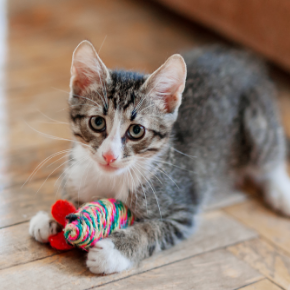
Christmas for our feline friends should definitely include some cat toys (who doesn’t like a toy for Christmas?!). But for the family moggy there are plenty of other things you might get them too. We have a selection of Christmas gifts for your pets in our reception but, in addition to these, our head nurse Linsey called a short but inspirational meeting and here’s a longer list of inspiration that we came up with.
Ask about gifts we have in stock. Contact Us.
Our Cat Toy & Christmas Gifts Ideas
- Cat Toys – Cats love anything with catnip, especially if it’s small and moves. With our long-stay cat patients in Glasgow we often entertain them with small squeaky mice stuffed with catnip.
- Food – Whatever you choose as a treat, do buy good quality, and don’t change your cat’s diet too quickly.
- Bedding – There are some great new bedding ideas around, so why not treat your cat to a comfier Christmas?
- Climbing frame – Cats just love to climb, so why not keep the Christmas tree safe and treat yours to its own specially designed climbing frame?
- Water fountain – These are great for encouraging cats to take more water on board, especially if they eat dry food or have bladder or kidney disease.
- Grooming tools – All cats like and need to keep their coat in tip-top condition, so what better gift than a new grooming brush? Linsey and the team are the best people to advise you on brushes and combs. Call them for advice.
- Microchip or GPS collar – There are more ways than ever to keep tabs on our pets these days. Just google ‘GPS Cat collars’ and take your pick. Cool gadgetry.
If you need any advice on what’s suitable for your feline friend or if you’d like us to order anything special from our suppliers, please don’t hesitate to drop us a line.
In the meantime why not contact our reception team to find out what cat gifts we have in the practice today.

The Christmas holidays are a time when our pets tend to get a few more treats than normal. Nothing too wrong with that, assuming you stick to the 90/10 rule and treats end up comprising no more than 10% of a complete and balanced diet.
The good news is that, if you want to give them treats, there’s no need to spend a fortune on specially formulated food, when your fridge and your fruit bowl could be hiding a bunch of tasty titbits that your pooch will pounce on at the first opportunity.
Before you start on the treats though, why not take this opportunity to pop in for a free nurse led weight check at our Woodside Avenue surgery. A quick hop on the scales is never a bad thing and it may give you some good insight into how your dog’s diet should shape up over Christmas.
Book a Free Nurse Led Weight Check
Assuming all is well then you may like to know that many fruits and vegetables make wonderful treats for dogs. They are nutrient-rich, convenient and generally low in calories. Which will help you meet the challenge that many of us face in striking a balance between treating our furry friends and managing a healthy weight.
So, here are four of our kitchen essential favourites;
- Apples. Good for dogs and people! Packed with nutrients and fibre, a few pieces of apple are great snack, but don’t feed them the seeds or core.
- Green Peas. Defrosted green peas (or fresh) are great treats, and most dogs love them. Use as training treats or just put some in their bowl.
- Carrots. Loaded with vitamins, carrots are a kitchen staple you can cut into bite-sized pieces (depending on your dog’s size) and use as a healthy reward.
- Green Beans. Plain and simple when cut into manageable lengths, beans are a great source of fun & fibre.
Take it easy … peasy
There’s lots more, including bananas, broccoli and even cooked (and cooled) squash like pumpkin & sweet potato. Top tip… if you’re introducing new treats, then it’s generally best to start with one or two pieces to see how they get on.
Finally, it may seem obvious, but actually, dogs don’t really care what they are getting. Often, they crave the attention as much as the treat. So why not keep a fraction of their daily rations to hand out slowly as treats. Fun for you, rewarding for them, easy on their weight and kind to your pocket too.

With the hot spells we’ve been having over the last few months, older dogs will be feeling that heat a little more than their younger pals. Regular health checks really are worthwhile, and at Avenues Veterinary Centre we pride ourselves on providing the best care for our older patients.
If your dog is getting on a bit and you’ve not had them checked out recently then why not book a senior dog health check
Our head vet has put together a list of some of the things we’ll discuss with you or be looking out for when you visit.
- Diet – Your dog’s nutritional requirements will change as they enter their senior years. Their metabolism will slow and their ability to repair damaged cells in the body decreases. There are special diets available that take these changes into consideration. We’ll help you decide if it’s time to change to a senior food and how to make the transition.
- Weight – One of the best ways to monitor your pet’s health is to keep a close eye on weight and body condition. If you can, weigh your dog regularly in between vet visits (you’re welcome to bring them in and use our scales). Keep good records and let us know if you notice any weight loss or gain which isn’t expected.
- Arthritis – A degenerative and incurable condition, arthritis affects 4 out of 5 older dogs. The good news is, with the right combination of treatment and medication, the symptoms of arthritis can be managed and your dog can have a good quality of life. So, if you notice any new stiffness, limping or difficulty climbing stairs or into the car in between vet visits, then please do contact us.
- Dental care – Age takes its toll on your dog’s teeth, so it’s well worth keeping dental problems at bay. Poor dental health will affect your dog’s general wellbeing through pain, discomfort, and problems eating and drinking. It can also affect the rest of their body as harmful bacteria can enter the bloodstream and damage organs such as the kidneys, liver, or heart. If you don’t know how to clean your dog’s teeth then pop in and we’ll show you.
- Incontinence – This can be a relatively common problem, especially in older spayed females. If you notice damp patches where your dog has been sleeping, or if they’re constantly grooming the wet fur where the urine is leaking, then bring a fresh urine sample to your next appointment as we may need to run further tests to make a full diagnosis. Thankfully the majority of cases can be managed or treated.
If you have any concerns about your older dog’s health, book a senior dog health check with our veterinary team so we can advise you on the best treatment for them.

Just like humans, cats slow down a bit as they get older. From the age of about seven or eight onwards, changes in appetite and behaviour should not be confused with changes in personality, which can be indicators of illness. So, if you have concerns in between regular checks, do get in touch as early diagnosis of issues will lead to a better quality of life.
In the meantime, we’re offering a little advice for the care of ageing cats.
To help you keep it in mind we’ve produced a handy ‘Senior Cat Checklist’ that you can download, print, and check back on in-between visits to the surgery.
Get our five-point senior cat checklist
Things you’ll notice as your cat ages:
- Their coat can lose its silky soft shine and grey hairs may start appearing.
- Their memory, sight, and hearing may deteriorate.
- They may sleep more in the day and become more active at night.
Harder things to spot include the fact their bones can become weaker, the immune system less effective, and their internal organs deteriorate. The good news is that there is quite a bit we can do to reduce the effects of ageing, which means that most elderly cats are able to live healthy and happy lives.
Your older cat to-do list:
- Protection – Remember that, no matter how old your cat is, they will still require regular vaccinations, and flea & worming treatments to help protect them against harmful and life-threatening parasites and diseases.
- Activity – Keep your cat mentally young by keeping them active! Regularly hide toys around the house and challenge your cat to find them. Spend time with your cat each day to play with them and stimulate their mind.
- Toileting – Your cat may prefer to toilet inside, where they feel safer. If you notice a change, get an indoor litter tray with low sides for easy access.
- Weigh-ins – Weigh your cat at least every couple of months. Keep a careful record and call us if you find anything you weren’t expecting.
- Body shape – Like humans, oversized cats are prone to diseases such as diabetes and kidney disease. Ask [Linsey] or any of our nurses to show you how to perform and record a ‘body condition check’.
- Diet – There are a number of diets that are specially formulated for senior cats. These contain proteins, carbohydrates, and fatty & amino acids that are aimed at keeping older cats healthy and happy. We’ll talk to you about these when the time is right.
- Grooming – If your cat’s fur is starting to look a little matted then you should bring them in for a check-up. Matting may indicate a condition that can prevent your cat from grooming, which is essential for good health.
- Claws – Regularly check those claws. Reduced activity in older cats can cause claws to become overgrown, curl around, and grow into the paws. Pop in and ask us if you’re unsure.
Download our senior cat checklist
Don’t forget, if you have any questions about senior cat care, we’re always here to help. Get in touch.

Rabbits are elite hiders of pain thanks to their built-in ‘predator protection’ system. In the wild, showing pain and weakness would make them vulnerable to predators so it’s no surprise they’d want to keep their pain under wraps. Our head nurse recommends getting your older rabbit’s health checked regularly to uncover any problems that could be underlying.
Book a senior rabbit health check
Small rabbit breeds generally become seniors at age 8, medium breeds at 6, and large breeds are considered seniors at just 4 years of age. Our nursing team has put together their top tips for how to help your rabbit enjoy their senior years:
Weight & diet – Older rabbits are less active, but also their weight can drop. We can recommend a senior rabbit pellet diet that’s been specifically designed to cater to their needs (they’ll still need fresh hay, greens, and water too). If you have two rabbits, you may need to separate them while they eat to ensure your senior pet gets the amount of food they need. Weigh your rabbit regularly and let us know about any unexpected changes.
Dental care – Many older rabbits have some degree of dental disease, but malocclusion (a misalignment between both dental arches) can occur at any time and can be an emergency. Look out for decreased appetite and droppings, favouring certain foods, salivating, weight loss, and swellings around their mouth and jaw.
Arthritis & Spondylosis – Both are common conditions in senior rabbits that often go undiagnosed due to a lack of regular health checks. Slowing down isn’t always just a ‘sign of age’, it can be due to one or both of these painful ailments. Following a positive diagnosis, your rabbit can start treatment to improve their symptoms.
Grooming & care – Older rabbits, especially those with arthritis, will struggle to reach all of the areas they need to groom to stay clean and healthy, especially their bottom. You can help them by regularly checking their bottom and fur, and cleaning away any dirt or debris to help avoid flystrike, which is a serious issue. Gentle handling is essential as older rabbits will be a little less robust and could be in pain. Their claws may need trimming more regularly too.
Changes at home – Making some simple changes to their housing and your home could do wonders for your senior rabbit’s comfort and mobility:
- Use thick, absorbent bedding such as Vetbed, which will draw any urine away from the body and provide padding to support changes in weight or hair loss.
- Place rubber-backed mats on laminate or wooden flooring for better grip where your rabbit hops around your house.
- Swap litter trays to low sided ones, or you can use plastic dog beds with a lower entrance so your rabbit can get in and out easier.
- Review your older rabbit’s accommodation – two-storey hutches with ramps can be problematic, and outdoor hutches can be cold this time of year. Try reconfiguring, moving, and even wrapping your rabbit’s hutch in a blanket.
As the colder weather starts to set in, why not book your rabbit in for a senior health check with our friendly team.


