

If your cat has gained weight recently you might be planning to cut down their portions or switch to a lower calorie alternative; after all, that’s what us humans would do!
With cats, however, even small changes to their diet can have a big impact on their health, and not always a good one. Our head nurse Linsey Wallace, explains why you should always consult with your Vet before putting your overweight cat on a diet.
Carrying too much weight can cause your cat health issues, both now and in the future. This is why it is so important to get on top of the situation sooner rather than later.
According to Linsey, all cats have individual physiologies and needs. Even small changes can make a big impact, which could be positive or negative. Changes might be food amount, specialised diets, and frequency of meals.
By booking an appointment with one of the Vets at our Glasgow practice, they can help you help your overweight cat lose the weight safely.
How our Vets can help:
- A nose-to-tail health check to look for any health issues that might be affected by a new weight-loss programme.
- An examination and Body Condition Score will determine how overweight they are.
- Discuss your cat’s ideal weight with you – usually 8-10 lbs dependant on age and breed.
- Answer your questions or concerns.
- Create a personalised weight-loss plan for your cat’s needs.
- Enlist the help of our nursing team to support you through your cat’s weight-loss journey and monitor their progress.
Our Vets will also advise you to take it slow when it comes to cat dieting. Any changes to your cat’s food should be transitioned over 2-3 weeks to avoid unnecessary stress on your cat and potential health problems.
Another important factor in any weight-loss programme is exercise. Linsey and the rest of our team will be able to share lots of tried & tested ways to encourage your cats to be more active, involving healthy treats and interesting cat toys!
Take the first step in helping your overweight cat and book an appointment now.

You’ve seen the memes with cats stuck in Christmas trees, but what else can go wrong during the festive season when you have cats? Head Vet Nicola Armstrong, shares common causes of Christmas cat injuries and advises how to avoid them.
Given how curious cats are, it makes sense to keep our number in your phone just in case your cat gets into any bother.
Call 0141 643 0404 for cat advice
Six common cat concerns at Christmas in Lanarkshire:
Road traffic accidents
With all the noise and commotion that comes with Christmas, including extra guests at your home, cats often roam outdoors to escape the mayhem. As it gets darker earlier during winter, your cat is more at risk of being hit by a car. Nicola recommends fitting your cat with a reflective collar and providing ‘safe spaces’ indoors for your cat to take solace in when it gets too much.
Consuming harmful food & drink
Christmas can be a fun time of year for cats, with tasty morsels of food and leftover drinks all over the place to try. Some items such as pigs in blankets could give your cat an upset stomach, whereas toxic treats like chocolate or mince pies (containing dried fruit) could cause them severe harm. It’s wise to keep food, alcohol, and paracetamol (for the Boxing Day hangover) behind a closed cupboard, pantry, or fridge door and away from curious cats.
Plant poisoning
Poinsettias, holly, and mistletoe are festive favourites for many households. Unfortunately for cats, they can cause a variety of health problems ranging from nausea and vomiting, to collapse and seizures. Nicola recommends keeping harmful Christmas plants out of reach, or not keeping them at all.
ANTIFREEZE ALERT
– This substance is highly toxic to cats but tastes sweet (so we hear). Clean up any spills and keep the container somewhere your cat can’t get to it – remember cats can climb!
Christmas tree injuries
Saying cats and Christmas trees don’t mix well is an understatement in some households. Cats love to play with delicate baubles and wires, climb the tree, eat the needles, and rub themselves against the branches – all of which can end badly. Nicola has this advice for cat owners:
- Consider choosing an artificial tree – real fir trees produce toxic oils that can harm cats when eaten or absorbed through the skin and eating pine needles can cause a lot of pain.
- Smaller Christmas trees should cause less damage to your cat if they fall over – secure your tree to a wall or ceiling or use a heavy base to steady it.
- Choose shatterproof or soft hanging tree decorations and nothing edible if you have pets.
- Keep wires contained so they don’t look like string to play with to your cat.
- Decorate your tree without your cat in the room and avoid leaving your cat alone with it.
Burns & scalds
Cats can easily get burned or scalded accidentally at Christmas time, with knocked over candles and cooking pans being the common causes. Avoid injuries by keeping candles out of reach, or your cat out of the room, especially the kitchen when you’re cooking.
We hope you found Nicola’s advice useful. As always, if you have any concerns about your cat, get in touch with us here at Avenues Vets in Glasgow.

When the days and nights start getting colder, the veterinary team at our Woodside Avenue practice recommend bringing your cat to see us for a pre-winter health check, to make sure they’re in tip-top condition.
Autumn is a good time to make sure vaccinations and parasite treatments are up to date and nip any emerging problems in the bud, to avoid them worsening during the colder months. After all, it’s a time when we’re all at our most vulnerable.
Book a pre-winter health check
So, what will we look out for at your cat’s pre-winter health check?
1) Vaccinations and parasite prevention
The first thing we’ll do when you attend a pre-winter health check is to review the basics by weighing your cat and checking their vaccinations and parasite treatments are up to date.
2) Weight and body condition
If it’s appropriate, we may have a chat with you about making sure you don’t end up with an overweight cat. As temperatures fall, it’s tempting (and natural) for us all to eat more food (back in the day because we needed more energy in winter but now…) for comfort and warmth. Also, nowadays, treats typically become more frequent in the approach to Christmas. Your cat might eat up to 25% more food during this time than they would in other seasons.
3) Common cat health conditions
If you have an older cat, arthritis can strike during cold weather. Poor vision can also be an issue, especially as the nights draw in. But at any age, we can give your cat a thorough examination to spot signs of anything that may require treatment or extra care.
4) Teeth
Like vaccinations, a seasonal check-up is a great opportunity to make sure your pet has no dental concerns. Extra treats and other rich food over winter might pose a greater threat than usual so it’s a good idea to get ahead of any issues.
If there’s anything else that worries you about your cat during autumn and winter in Lanarkshire, please don’t hesitate to speak to Linsey, our head nurse, or any of our team; we’ll refer you to one of our friendly Vets if we feel that more attention is required.

Morning sickness, increased appetite, nesting…a growing abdomen…surely not? Indeed, your cat could be having kittens! The Avenues Vets’ head nurse Linsey, has some helpful advice for unprepared owners of cat-mums-to-be.
What to do if you suspect your cat is pregnant
First, don’t panic. Look for other cat pregnancy signs: red and enlarged nipples, 1-2kg of extra weight, and changes in behaviour such as wanting more fuss. Weight gain can also be associated with other conditions so a health check would be sensible.
If you have your suspicions, or your cat doesn’t seem herself, it’s advisable to book a check-up with one of our vets. They will do an all-over health check, and may be able to confirm a pregnancy just 15 days into her term using ultrasound. By day 40, our vets should be able to tell you the number of kittens your cat is carrying. Cat pregnancies can vary from 61 – 72 days in total.
How to make your cat’s pregnancy comfortable
Be sure to ask us what to expect when your cat is expecting. From a cat pregnancy timeline, to safe flea & worm treatments and the birthing process, our experienced vets can help you get prepared. You will also need:
- More food: Pregnant cats eat around 25% more food especially in the last 3-4 weeks. Regular meals will help keep her and her unborn kittens healthy.
- More water: She should also have access to more fresh water whilst pregnant, birthing, and lactating. Keep this out of reach of the kittens during and post-birth to avoid drowning.
- A kittening box: Create a safe space in a quiet corner, away from family members and other pets. Line a large box or cat bed with clean blankets and sheets (have extra ready too). Introduce her to it at least 2 weeks before the impending due date.
- Loving homes: ‘Lucy’s Law’ means kittens can no longer be purchased from anyone other than a breeder, or animal shelter. It’s a good idea to start looking for suitable homes early in the process.
How could this have happened?
Many cat pregnancies are unplanned; think unneutered cats in the wrong place at the ‘right’ time. Until your female cat has been neutered, she is at risk of becoming pregnant from just 4 months old. Typically, between February and October, cats have multiple short ‘heat’ cycles and are ready to mate.
You wouldn’t think this, but cats can get pregnant whilst pregnant! Some cats continue to have heat cycles during their pregnancy, so they are at risk of being ‘successfully mated’ multiple times.
Neutering is the only sure-fire way to avoid your cat having kittens, and it can be done from around 6 months of age. Stopping your cat going outdoors and mixing with unneutered male cats is recommended too.
Is it dangerous for a kitten to get pregnant?
Cats should ideally be fully grown and healthy before they get pregnant – around 18-24 months of age. Any younger and there is a risk to your pet’s health as she has not fully developed herself. Carrying kittens will use up valuable nutrients needed for her own growth and development.
At Avenues Vets in Glasgow, we’re highly experienced when it comes to cat pregnancy and kittens. Our team is happy to help if you have any questions.

Did you know that most summer cat diseases are preventable? According to our veterinary team at Avenues Vets, cat owners in Lanarkshire can lower the risk of their feline friend contracting a common cat illness, by carrying out a few simple checks this summer. Follow our checklist below.
Nicola’s three summer checks every cat owner should make:
1. Check your cat’s vaccinations are up to date
The risk from infectious common cat diseases is greater in summer as there are more cats outdoors. Cats are routinely vaccinated against the below diseases to give them optimal protection:
- Feline Infectious Enteritis
- Feline Herpes Virus
- Feline Calicivirus
- Feline Leukaemia Virus (optional)
The schedule for some vaccines may differ depending on your cat’s age and lifestyle. For example, indoor cats may need less frequent vaccines for certain diseases than outdoor cats, and some vaccines last longer than 12 months. If you’re unsure whether your cat is due a vaccination and you’re registered with Avenues Vets, get in touch and our team can help.
Contact us about cat vaccinations
2. Check your cat for obvious signs of illness
Cats can be masters of disguise when it comes to illness and pain. However, there are some common, obvious signs that your cat might be sick: sneezing, coughing, runny eyes & nose, loss of appetite, vomiting, diarrhoea, and lethargy.
If your cat is due a vaccination, our vets can give them a nose-to-tail health check at the same time to look for any potential problems. Talk to us about your cat’s vaccinations and health.
3. Check your cat for ticks and other parasites
- Check your cat for ticks when they come home for the day by running your fingers through their fur and feeling for little hard bumps. You’ll need a special tick removal tool to avoid leaving the tick’s head in, as this increases the risk of disease transmission. Ticks can carry Lyme disease, a debilitating condition that can affect cats, dogs, and humans.
- While you’re there, it’s worthwhile checking your cat for signs of fleas & roundworms. Always wash your hands after and ask our team what to look out for if you’re unsure.
Our Woodside Avenue team can talk to you about the best combination of preventative treatments to give your cat optimal protection from parasites and common diseases. They can also tell you about our pet health plan that can save you money on preventative cat care. Just give us a call on 0141 643 0404.

Kittens are as cute as buttons but in those formative weeks and months they can occasionally be little devils too and their enthusiasm for life can prove a bit destructive.
But so long as you’re prepared you and your kitten can have hours of fun without the downside. Here at the practice in Woodside Avenue we’ve plenty of experience with kittens, so here are some suggestions to make those first few weeks and months a happy learning curve for both you and your pet. If you’ve any questions after reading this, don’t hesitate to contact us for advice.
Contact us for kitten care advice
When you bring your kitten home it will need your help to get used to its new surroundings and to become socialised into your way of life. To make things easier all round make the most of this impressionable age to:
- Ensure it is introduced to all members of the family and gets used to being around people of all ages, as well as other pets.
- Introduce your kitten to various essential items it will need to get used to, including litter tray, grooming tools and its pet carrier – essential for journeys away and trips to the vet.
- Start a routine for feeding and try to stick to it.
- Bring in plenty of toys and a scratching post to distract your kitten from the soft furnishings.
- Expose your kitten to as many experiences as you can – have a think about the encounters it is going to make throughout its life.
- Keep any potential poisons, such as household cleaners, out of your kitten’s reach.
- Introduce play time. The more time you spend playing with your kitten the more it will bond with you.
- Make sure your kitten has a safe space of its own to rest and sleep in.
Your kitten will need vaccinations and parasite prevention treatment too, so bring it along to Avenues Vets where we can chat to you about what’s needed and get it used to being handled by our team too.
We look forward to meeting your new arrival but in the meantime we are here to offer kitten advice when you contact us.

A buzzing bee whizzing through the air must seem like a fun game to a cat, until they get stung. Head nurse Linsey Wallace wants cat owners in Lanarkshire to learn some basic first aid so they know what to do if their cat gets stung by a bee.
If you can, try to determine whether your cat was stung by a bee, wasp, or hornet. Quickly search the area where it happened for the insect.
Wasps are long and thin, have little or no hair, and are distinctly bright yellow and black. Bees are typically furry. A hornet is much larger and more aggressive. Our nurses have found some fun facts and advice on how to tell the difference:
Fun facts from the BBC: www.bbc.co.uk
Advice from the British Pest Control Association: bpca.org,uk
If your cat is unfortunate enough to get stung by a bee or another buzzing insect, Linsey has these first aid tips:
- If the insect is still attached to your cat, use something flat like a credit card to scrape it and its stinger away. Be careful not to get bitten or scratched by your cat, you may need a friend to help hold them.
- If you didn’t see the incident occur, look out for excessive licking of an area, which could also be red and swollen.
- Apply an ice pack wrapped in a towel to the area to reduce the swelling, and prevent your cat from scratching it – a cat head cone would be ideal.
- You can apply a home remedy to reduce pain and neutralise the sting;
- Bee/hornet sting: a thick paste of water & bicarbonate of soda/salt.
- Wasp stings are alkaline: lemon juice or vinegar.
- Contact your vet quickly if your cat experiences severe swelling or agitation, hives, excessive drooling, collapse, or seizure.
- Monitor their health and behaviour for 24 hours and keep up with hydration and food intake.
- You may also want to contact your vet for advice if the sting is near your cat’s eyes (can affect vision), and mouth or throat (can affect breathing).
- Some antihistamines for humans can be used, however, never give your cat human medication without instructions and the correct dosage from your vet.
In case your cat ever gets stung by a bee and requires urgent treatment by a vet, pop our emergency number in your phone. Our emergency info

Winter in Lanarkshire is in full swing, and that can be problematic for your feline friend’s fur if you don’t help them take care of it.
A cat’s coat contains millions of soft, silky hairs designed to regulate heat and protect them from the elements, as well as provide vital sensory aids. Our head nurse Linsey Wallace has this advice on how to provide optimum winter coat care for your cat.
Ask us about cat coat care products. Contact Us.
1. Help with grooming
Cats sometimes need help grooming their thicker winter coat to remove dirt and debris from the outdoors. Brush your cat more regularly this season to help prevent their thicker coat from becoming matted and tangled.
2. Be careful with tangles
If your cat’s fur has become matted, be extra careful when trying to remove tangles as they can be painful and cats can be sensitive. Use clippers designed for sensitive areas and never use scissors as you risk cutting their thin skin.
3. A winter coat of fur not fat
A cat’s winter coat should be lined with fur, not fat. If your cat is less active during winter, keep an eye on their weight. An overweight cat is at risk of health problems and won’t be able to reach everywhere to groom.
4. Omega 3 is key
A healthy, balanced diet containing Omega 3 can help your cat grow a thicker, shinier, and healthier coat. Opt for a cat food that’s been specially formulated for healthier coats. Before changing your cat’s diet, speak to your vet for advice.
5. Keep parasites away
Fleas, worms, and mites can cause havoc inside and on your cat. Make sure to keep up to date with parasite treatments to avoid any extra problems for your cat’s coat.
6. Too much heat can cause problems
Turning up the heating too much and drying out the air indoors can lead to skin and coat problems, like dandruff and itchiness. It can also create static electricity. Avoid giving your cat an electric shock by using a dehumidifier, wiping your cat with a pet-friendly wipe before grooming them, and not using fabric softener on your cat’s bedding (some contain chemicals that are toxic to cats).
7. Only bathe if absolutely necessary
Most cats dislike water, that’s a given. If your cat is muddy, try waiting for it to dry before brushing it off. Sometimes though, a cat bath might be your only option.
Be careful as some pet shampoos can exacerbate existing dryness by stripping the skin and fur of its natural oils.
Talk to our team about the best cat coat care products.
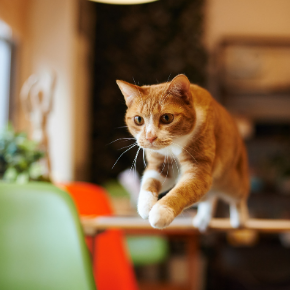
New year’s resolutions aren’t restricted to us humans. Why not commit to some changes in 2021 for your cat too, and help them start living their best life?
Your goals should be measurable so you know what you’re working towards and can assess your progress along the way. Linsey and the nursing team have put together some ideas on positive new year changes for you and your cat:
Eat healthier treats
- YOU: Swap two unhealthy treats for healthy ones e.g. swap the ‘elevenses’ biscuit break for an apple with peanut butter, and your daily bag of crisps for some healthy nuts or a yoghurt.
- CAT: Swap your cat’s treats to a healthier brand, and swap any unhealthy human food treats such as cream or cheese, to a few flakes of tuna.
- BOTH: Try making healthier treats for you – https://theclevermeal.com/20-wholesome-healthy-cake-recipes/ – and for your cat: https://www.battersea.org.uk/about-us/news/homemade-cat-treats
Drink more water
- YOU: Drink at least 2 litres of water per day.
- CAT: Encourage your cat to drink more by putting a little bit of water in their food if they’ll tolerate it, and leave more water bowls indoors and outdoors – some cats like to drink rainwater. Mixing a bit of wet food into their dry kibble will help to add moisture to their diet.
Increase exercise
- YOU: Aim for 30 minutes of moderate exercise daily. If you want to lose weight, you’ll need to exercise more vigorously, more often, or for longer.
- CAT: Give your cat more opportunities to increase their activity levels, such as a range of toys to chase and hunt, and a home gym – check out this video: https://www.youtube.com/watch?v=8kUBJd1xU50
- BOTH: Cats and owners who play together…lose weight together! What better way to shed some Christmas pounds, than playing with your cat? Chasing a toy on a string around the house can be quite energetic and fun for you both!
Make bonding a daily activity
- BOTH: Cat owners love cats, and cats love their owners, so make one of your new year’s resolutions to spend 20 minutes (minimum) each day with your cat just bonding. Whether that’s playing, stroking or grooming them, letting them ‘knead’ you, or just simply being with them, make it a daily activity in 2021.
As always, if you want any advice on how to care for your cat, get in touch.


